Superior Licorice Korean Mint | Experimental Farm Network
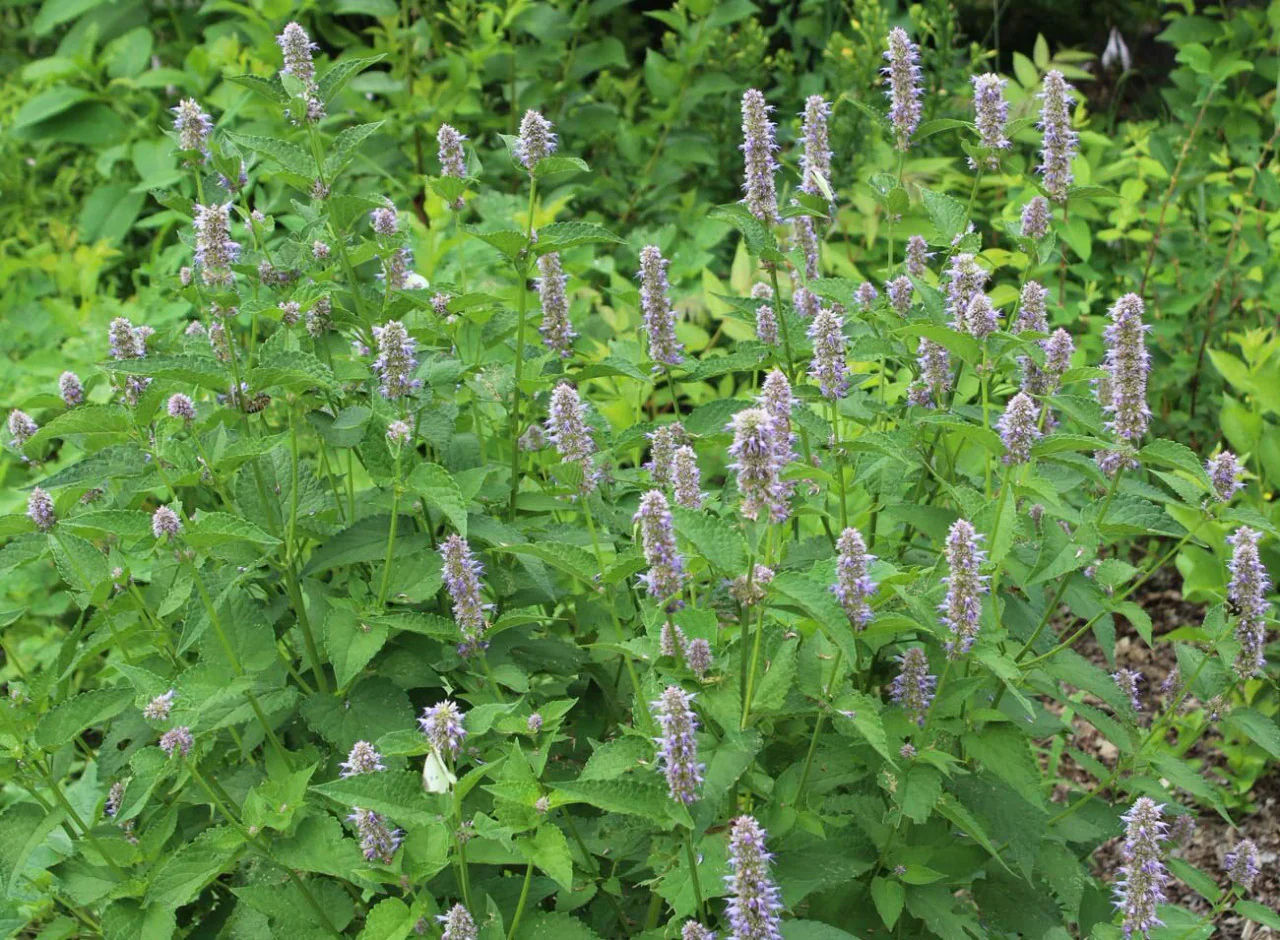
Agastache rugosa
Origin: East Asia
Improvement status: Wild
Seeds per packet: ~200
Germination tested 08/2024: 89%
Life cycle: Perennial
This relative of anise-hyssop looks quite similar and is equally attractive to pollinators, but has a more minty, menthol-like smell and flavor and it grows to two or three times the size (about 6’ tall in good soil and full sun). It is a popular food item in Korea, where it is called banga and is used most often in fish stews or pancakes (the famous Banga-buchimgae). In China, it is one of the 50 fundamental herbs in traditional Chinese medicine, used particularly for nausea, vomiting, and as an appetite stimulator. Hardy to Zone 7 as a perennial, but grows as a self-sowing annual in most climates. Our seed comes from Frank Morton of Wild Garden Seeds in Philomath, Oregon
GROWING TIPS: Seeds are quite small, so surface sow in pots for transplants or direct sow into a carefully prepared, well-weeded seed bed. Prefers sun to part shade, and should thrive in most soils.
Provided by Experimental Farm Network
Product Information
Product Information
Shipping & Returns
Shipping & Returns
Description
Agastache rugosa
Origin: East Asia
Improvement status: Wild
Seeds per packet: ~200
Germination tested 08/2024: 89%
Life cycle: Perennial
This relative of anise-hyssop looks quite similar and is equally attractive to pollinators, but has a more minty, menthol-like smell and flavor and it grows to two or three times the size (about 6’ tall in good soil and full sun). It is a popular food item in Korea, where it is called banga and is used most often in fish stews or pancakes (the famous Banga-buchimgae). In China, it is one of the 50 fundamental herbs in traditional Chinese medicine, used particularly for nausea, vomiting, and as an appetite stimulator. Hardy to Zone 7 as a perennial, but grows as a self-sowing annual in most climates. Our seed comes from Frank Morton of Wild Garden Seeds in Philomath, Oregon
GROWING TIPS: Seeds are quite small, so surface sow in pots for transplants or direct sow into a carefully prepared, well-weeded seed bed. Prefers sun to part shade, and should thrive in most soils.
Provided by Experimental Farm Network