Hutterite Breadseed Poppy | Seed Savers
Papaver somniferum.
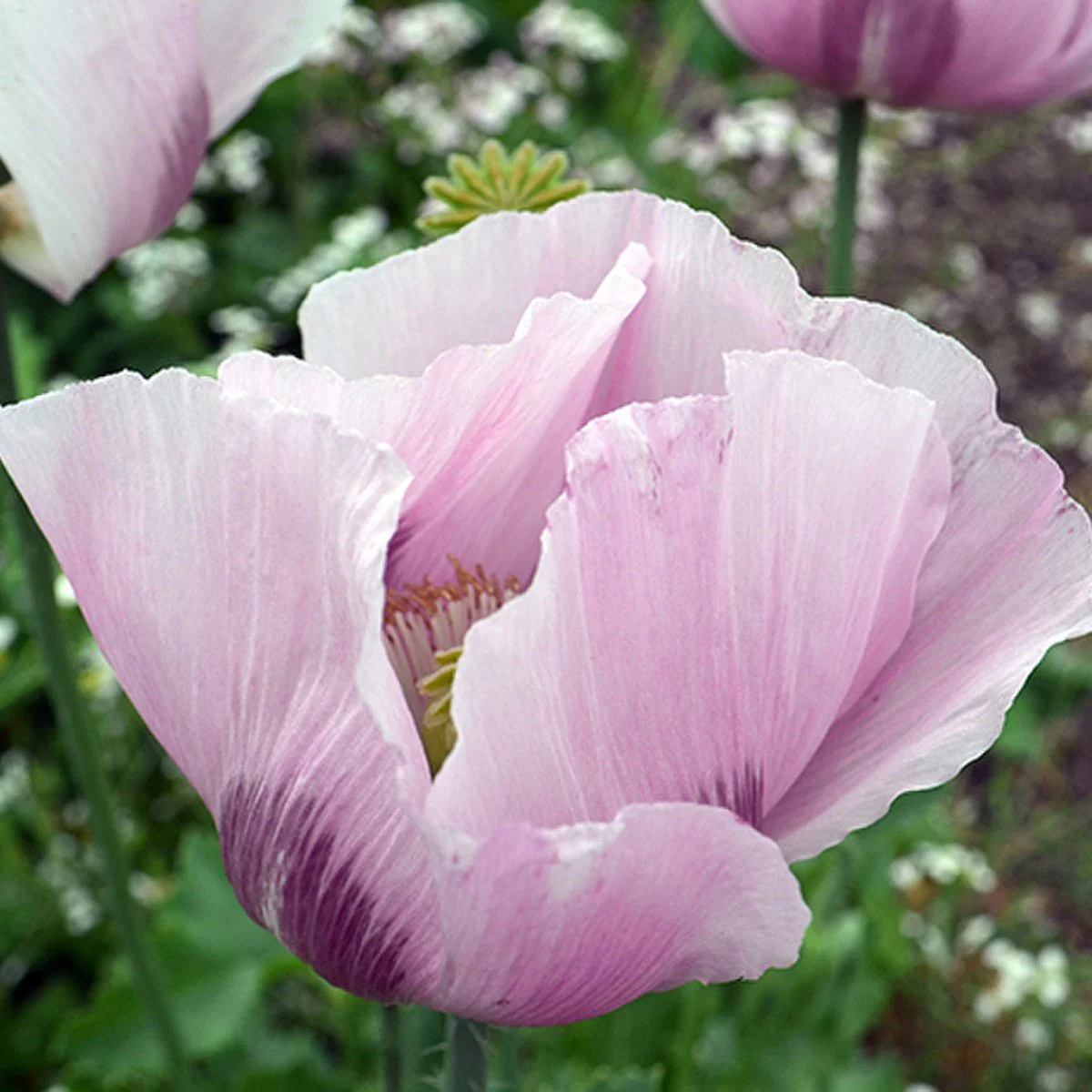
Large, showy flowers range in color from white to light pink with a darker-pink patch in the center. This self-sowing annual flower produces both gorgeous blooms and edible seeds. Bees love its pollen, so you’ll enjoy pollinators aplenty throughout the booming season too! NOTE: All plant parts except the seeds are toxic.
Sturdy-stemmed plants grow up to 3’ tall and produce large, elliptic pods. 90 days.How to Use
Poppies are grown for their beautiful blooms and dried pods, plentiful pollen (attracting pollinators), and edible seeds.
Blooms
Poppies bloom from late spring to early summer, making a lovely addition to flower beds and cottage gardens. Dried seed pods make a dramatic addition to dried flower arrangements.
Pollinator attraction
Poppy pollen attracts bees and other pollinators to garden spaces.
Growing Instructions
Direct sow seeds as early in the spring as the soil can be worked. Poppies don’t transplant well. The seeds are quite small, so plant them in a row or broadcast them in a bed. The seeds need light to germinate, so sow on the surface and press gently into the soil.
- Direct sow in early spring
- Germination: 10–25 days.
- Plant in average but well-drained soil
- Light: Full sun
- Spacing: Thin to 6–12” apart
Product Information
Product Information
Shipping & Returns
Shipping & Returns
Description
Papaver somniferum.
Large, showy flowers range in color from white to light pink with a darker-pink patch in the center. This self-sowing annual flower produces both gorgeous blooms and edible seeds. Bees love its pollen, so you’ll enjoy pollinators aplenty throughout the booming season too! NOTE: All plant parts except the seeds are toxic.
Sturdy-stemmed plants grow up to 3’ tall and produce large, elliptic pods. 90 days.How to Use
Poppies are grown for their beautiful blooms and dried pods, plentiful pollen (attracting pollinators), and edible seeds.
Blooms
Poppies bloom from late spring to early summer, making a lovely addition to flower beds and cottage gardens. Dried seed pods make a dramatic addition to dried flower arrangements.
Pollinator attraction
Poppy pollen attracts bees and other pollinators to garden spaces.
Growing Instructions
Direct sow seeds as early in the spring as the soil can be worked. Poppies don’t transplant well. The seeds are quite small, so plant them in a row or broadcast them in a bed. The seeds need light to germinate, so sow on the surface and press gently into the soil.
- Direct sow in early spring
- Germination: 10–25 days.
- Plant in average but well-drained soil
- Light: Full sun
- Spacing: Thin to 6–12” apart